What Is a Feast Day? Where They Came From, and How to Keep One
Christians were keeping the anniversaries of their martyrs by the middle of the second century. The Church still keeps them, and any family can.
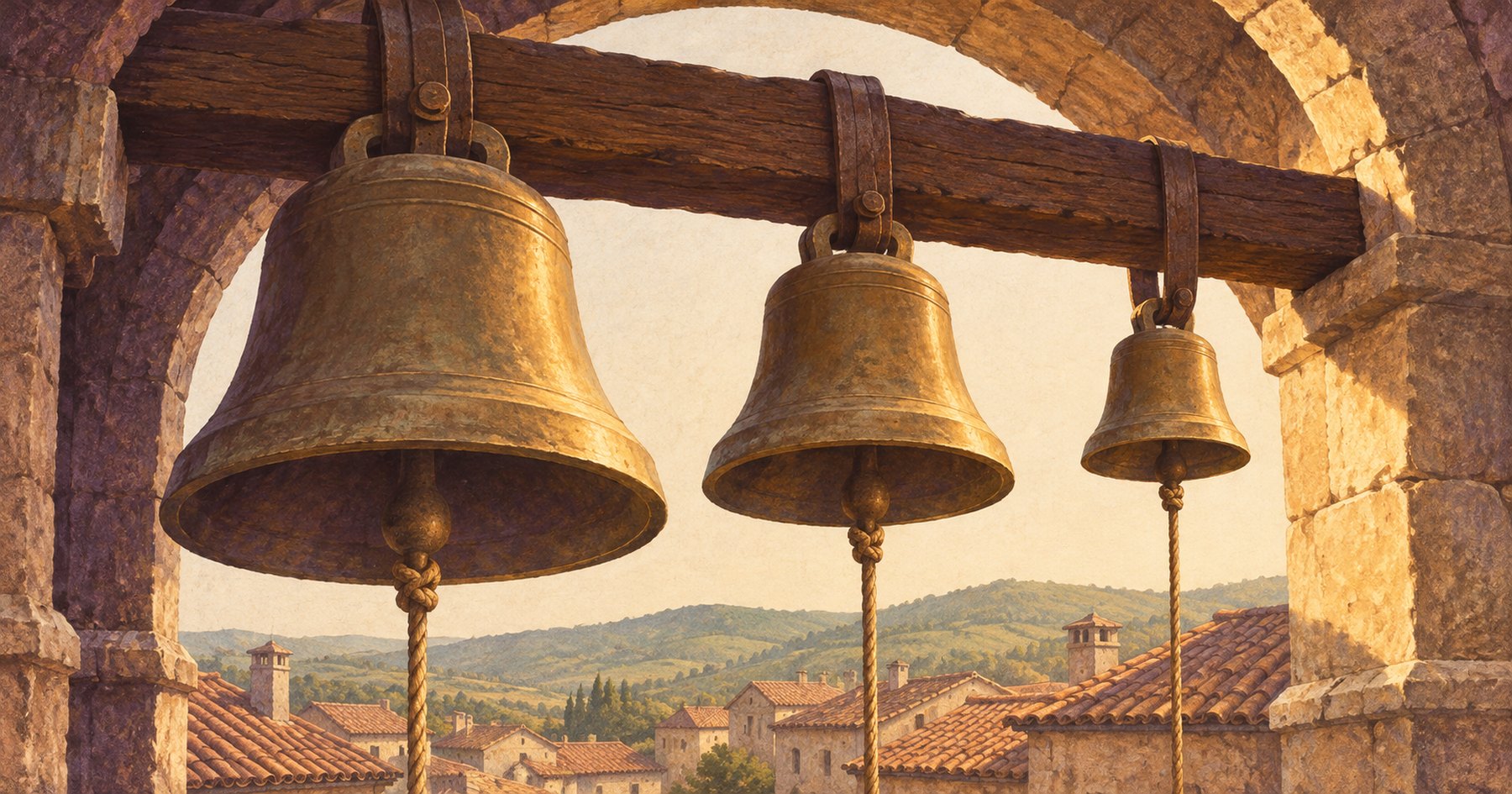
A feast day is the day each year when the Church remembers a particular saint, or a particular event in the life of Christ or of his mother. Christmas is a feast day. So is the Assumption, and so is the day of St. Francis, or St. Patrick, or St. Joseph. Nearly every day of the year has at least one saint attached to it, and most have several.
The idea is older than Christianity. God gave Israel a calendar of holy days, and the book of Leviticus sets them out, from the Sabbath and the Passover to the feast of Tabernacles. “These are the feasts of the Lord,” God tells Moses, “which you shall call holy.” Christ kept those feasts, and died and rose at the Passover. The first Christian feast was Sunday, the day of the Resurrection, kept every week, and soon Easter was kept once a year as the greatest feast of all.
Why the day a saint died
For almost every saint, the feast day is the day of his or her death. The early Christians called it the saint’s birthday, dies natalis in Latin, because it was the day the saint was born into eternal life.
The oldest record of Christians keeping such a day comes from Smyrna, in what is now Turkey, around the year 155. The bishop of Smyrna, St. Polycarp, had known the apostle John. He was put to death in the city stadium as an old man who said he had served Christ for eighty-six years, and the Christians of Smyrna wrote a letter to the other churches describing his death. In our translation from their Greek, they wrote that they gathered up his bones, “more precious than costly stones and finer than refined gold,” and laid them in a fitting place:
There the Lord will allow us to gather, as we are able, in gladness and joy, to celebrate the birthday of his martyrdom, in memory of those who have already fought the contest, and to train and prepare those who are yet to fight it.
That is the purpose of a feast day, written down by people who had watched their bishop die: to remember a saint with joy, and to be made ready by the saint’s example. His feast is still kept, on February 23.
By around 211, Tertullian of Carthage could list the yearly feasts of the martyrs among the customs every Christian knew: “We make offerings for the dead, for their birthdays, each year on the day.” Forty years later, during a persecution, St. Cyprian, the bishop of Carthage, wrote from hiding to his clergy about the Christians dying in prison: “Note down the days on which they die, so that we can celebrate their memory among the memorials of the martyrs.”
A few feasts celebrate a birth instead. St. Augustine, preaching on the feast of St. John the Baptist, pointed out how unusual it was. In our translation:
The Church has not kept the earthly birthday of any of the prophets, any of the patriarchs, or any of the apostles. She keeps only two birthdays, his and Christ’s.
Since Augustine’s time the Church has added a third, the birthday of Mary on September 8. Christ, his mother, and John the Baptist are still the only ones whose births are kept.
How the calendar grew
At first each church kept the days of its own martyrs, at their tombs. Rome’s list survives in a calendar made in the year 354. At its head stands December 25, “Christ born in Bethlehem of Judea,” the oldest record of Christmas on that date. After it come the Roman martyrs, and several of their days are still kept on the same dates nearly seventeen hundred years later: Sts. Fabian and Sebastian on January 20, St. Agnes on January 21, the Chair of St. Peter on February 22, and Sts. Peter and Paul on June 29.
When the persecutions ended, the Church began to honor saints who had not been martyred: holy bishops, monks, hermits, and women who had given their lives to God. St. Martin of Tours, who died in 397, was one of the first of them to be widely honored, and his feast on November 11 became one of the great days of the medieval year. Feasts of Mary multiplied, and so did feasts of the mysteries of the faith. Corpus Christi was given to the whole Church in 1264. Christ the King, on the last Sunday before Advent, was added by Pope Pius XI in 1925.
Over the centuries the calendar grew crowded, and from time to time the popes thinned it. After the Council of Trent, Pope St. Pius V issued a reformed breviary and missal with a much shorter list of feasts. In 1969, Pope St. Paul VI issued a revised calendar for the whole Church, and some saints whose lives are known only from legend were left to local calendars instead. St. Christopher was one of them. He was not removed from the list of saints, and his feast is still kept in many places. St. Philomena’s feast had been taken off the calendar a few years earlier, in 1961.
Today the General Roman Calendar lists the feasts kept by the whole Latin Church. Each country adds its own saints. In the United States, St. Elizabeth Ann Seton is kept on January 4 and Our Lady of Guadalupe on December 12, with a higher rank here than in most of the world. Dioceses and religious orders add theirs too. Behind all of these stands the Roman Martyrology, the Church’s official list of saints and blesseds, which names thousands of them, several for every day of the year. Most will never have a feast of their own, and All Saints Day on November 1 is kept for them.
Solemnities, feasts and memorials
In everyday speech, any saint’s day is a feast day. On the Church’s calendar, the days come in four ranks, and the rank decides how the day is kept at Mass.
- Solemnities are the greatest days of the year: Christmas, Easter, Pentecost, the Immaculate Conception, the Assumption, St. Joseph on March 19, Sts. Peter and Paul, and All Saints, among others. Mass includes the Gloria and the Creed, and the celebration begins the evening before, the way Christmas begins on Christmas Eve. Every parish also keeps the day of the saint or mystery its church is named for as a solemnity.
- Feasts come next. They include the apostles, such as St. Andrew on November 30, and days like the Nativity of Mary and the feast of the archangels Michael, Gabriel and Raphael on September 29. Mass includes the Gloria.
- Memorials are the ordinary rank for saints. On a memorial the saint’s own prayer is said at Mass. St. Monica on August 27 and her son St. Augustine on August 28 are memorials, and so is St. Cecilia on November 22.
- Optional memorials may be kept or not, as the priest chooses. St. Nicholas on December 6 and St. Blaise on February 3 are optional memorials, though both are widely kept.
Sunday outranks all but the greatest days. When a memorial falls on a Sunday, the Sunday Mass is said instead, and the saint waits until next year.
Why the Church keeps them
The Second Vatican Council gave the reason in a single sentence, and it still uses the old word for birthday. In our translation from the Council’s Latin:
On the birthdays of the saints, the Church proclaims the paschal mystery in the saints who have suffered with Christ and been glorified with him. She sets before the faithful their example, which draws all people to the Father through Christ, and through their merits she asks for God’s blessings.
A saint’s feast is first of all about Christ. Each saint is someone in whom his death and resurrection bore fruit, and the Church celebrates that. It is also about us. The saints show what following Christ can look like in a particular life, in a particular time and place, and they pray for us. The Letter to the Hebrews speaks of “so great a cloud of witnesses over our head,” and the feasts are the days the Church looks up at them one by one.
There is something simpler in it too. Families keep birthdays and anniversaries because they love the people whose days they are. The saints belong to the same family, and their feasts are kept for the same reason.
Holy days of obligation
Keeping most feasts is up to you. A few are obligations. Besides Sundays, Catholics in the United States are bound to go to Mass on six holy days of obligation: Mary, Mother of God on January 1, the Ascension, the Assumption on August 15, All Saints on November 1, the Immaculate Conception on December 8, and Christmas. In most of the country the Ascension has been moved to the following Sunday. When January 1, August 15 or November 1 falls on a Saturday or a Monday, the obligation is lifted, though the Mass is still celebrated.
The greatest feasts also set aside the Church’s ordinary penance. Friday is a day of abstinence from meat, but canon law makes an exception when a solemnity falls on a Friday. The feast of the Sacred Heart always falls on a Friday, so Catholics may eat meat that day every year, and when St. Joseph’s day falls on a Friday in Lent, they may eat meat then too.
How to keep a feast day
Nobody is expected to keep every feast on the calendar. It is better to choose a handful each year and keep those well.
Go to Mass. On a weekday feast, daily Mass is the simplest way to keep it, and the saint will be named in the opening prayer.
Learn the saint’s story. Read a short life of the saint, or tell it at dinner if you have children. Many saints have a prayer or a novena of their own, and the Liturgy of the Hours, the Church’s daily prayer, has a reading by or about many of them.
Ask for their prayers. That is what the saints do for us, and a feast day is a natural day to ask, for yourself and for the people you love.
Keep the customs. Many feasts have customs of their own, some of them centuries old:
- On St. Blaise’s day, February 3, priests bless throats with two crossed candles.
- On St. Joseph’s day, March 19, Sicilian families build a St. Joseph’s table, an altar heaped with bread and food that is given away to the poor. The custom came to America with Sicilian immigrants, and it is still kept in New Orleans and elsewhere.
- On the feast of St. Anthony the Abbot, January 17, and of St. Francis, October 4, many parishes bless animals.
- On St. Martin’s day, November 11, German children walk in lantern processions, and many families eat goose.
- On St. Lucy’s day, December 13, Swedish families keep a dawn custom: a daughter in a white dress, with a crown of candles, brings saffron buns to the rest of the house.
- On the eve of St. Nicholas, December 5, children put out their shoes.
Choose your own feasts. The feast of the saint you were named for, your name day, is the old Catholic way to keep a second birthday. Add the feast of your parish’s patron, the saints your children are named for, and the day of your own baptism, and a family has a calendar of its own. A candle on the table, a favorite dessert and the saint’s story told at dinner are enough to make it a feast.
The Christians of Smyrna, gathering at Polycarp’s tomb, kept his day “in gladness and joy.” Nearly nineteen hundred years later, that is still the way the Church asks us to keep the days of her saints.
A saint like this, every month
This is the sort of story in every issue of Saints by Mail: printed, reverent, and mailed to your door. A thoughtful gift for godchildren, families, and anyone who loves the saints.