Who Is the Saint for Your Birthday? The Name Day Tradition Worth Bringing Back
Most of the Catholic world celebrates a second birthday. Americans are about the only ones who dropped it.
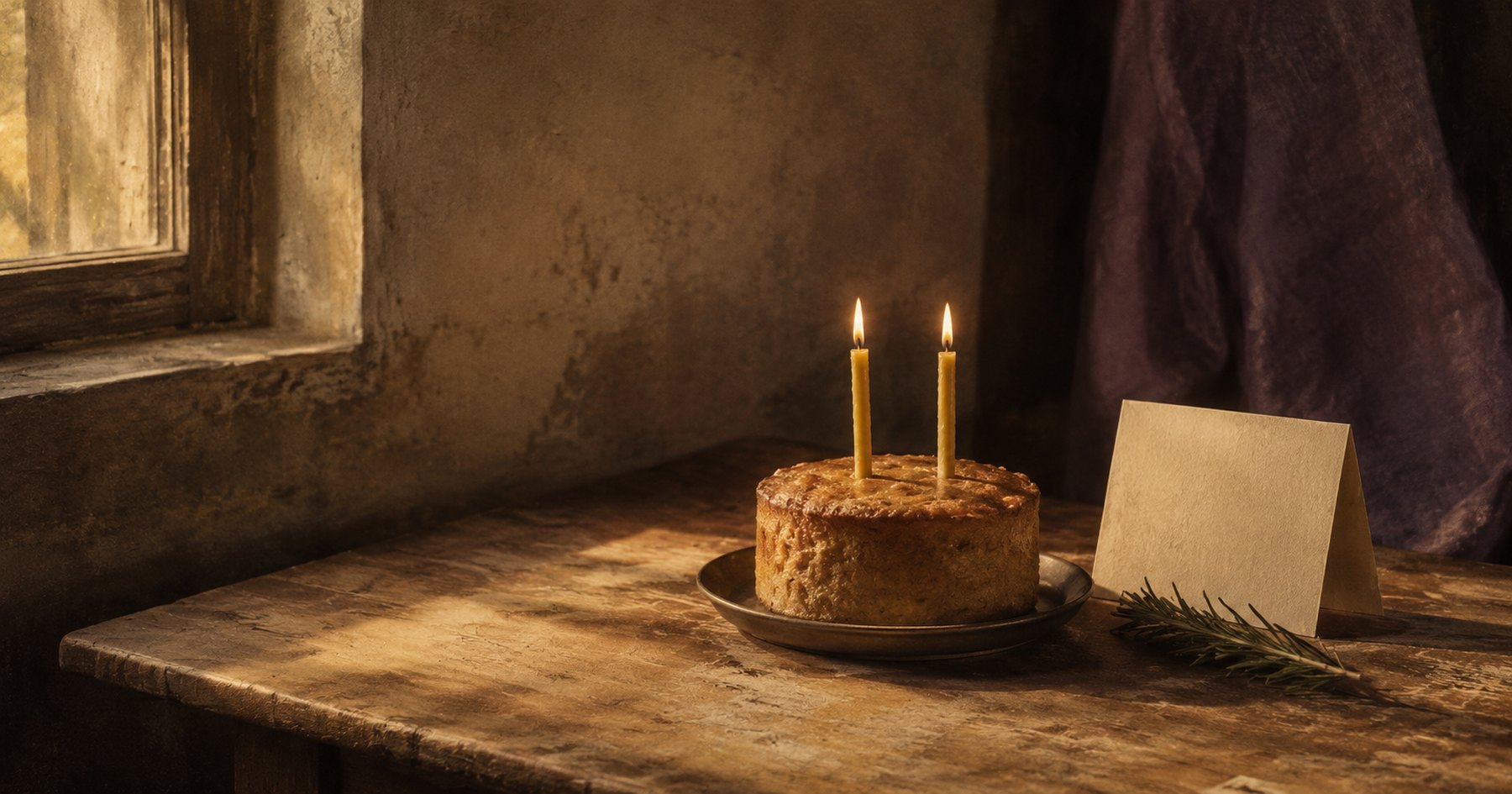
More Americans are born in September than in any other month. August is not far behind. If you run the numbers on the most common individual birth dates in the United States, the top of the list is a solid block of mid-September.
Which means that right now, and for the next several weeks, a very large number of people are trying to think of a present.
This is a good moment to mention something most of the Catholic world still does and Americans almost entirely dropped: celebrating the saint as well as the birthday.
The name day
In Italy it is the onomastico. In Poland, imieniny. In Spain and across Latin America it is your santo. Greece, Hungary, the Czech Republic, and much of Scandinavia keep versions of it.
The idea is simple. You are named after a saint, that saint has a feast day, and on that day people wish you well, bring a cake, or make a fuss of you. In parts of Europe within living memory the name day mattered more than the birthday, and the birthday was the minor occasion of the two.
It survives because of an old habit of naming. Catholics traditionally took a saint’s name at baptism, and another at confirmation. The 1917 code of canon law directed that a child be given a saint’s name. The current code, from 1983, is gentler and simply asks that the name not be foreign to Christian sentiment, which is a lower bar and one most names clear.
So the custom loosened. But the underlying idea did not go anywhere, and it is a good idea: that a person has a companion, someone specific, who is theirs.
The other version: the saint on your birthday
Alongside the name day there is a folk practice, less formal and very widespread, of finding out which saint’s feast falls on the day you were born and taking that saint as your own.
There is nothing official about it. No rule assigns you a saint by date. But it is a harmless and rather lovely thing to do, and in the middle of American birthday season it produces some good results.
Somebody born on August 27 gets Monica, who spent seventeen years praying for a son who wanted nothing to do with it, and who is the patron of everybody waiting on somebody.
Born a day later, on August 28, and you get her son, Augustine, which is a stiff inheritance for one family and a marvelous one for a birthday.
September 5 gives you Teresa of Calcutta. September 29 gives you the archangels, including Raphael, the patron of travelers and of happy meetings.
The calendar is crowded enough that almost every date has somebody. Some of them are famous and some are obscure, and the obscure ones are often the better story.
Why a saint is a decent thing to give somebody
Most birthday presents are objects, and most objects have a short half-life. They are opened, admired, used for a while, and absorbed into the house.
What the name day tradition hands over is different. It is a person: somebody with a life, a set of problems they worked through, and a particular thing they are asked about. Give that to a child, or a godchild, or an adult who already owns plenty of things, and you are introducing them to somebody rather than handing them an object.
That is the whole idea behind what we make.
Saints by Mail as a birthday present
Each month one saint arrives in the post, printed properly: a small illustrated magazine telling the story, and a collectible card to keep. Not a box of trinkets, and nothing to plug in.
The useful thing about it as a birthday present is that it does not finish on the day. It turns up again the next month, and the month after that, in a mailbox that is otherwise full of bills.
Three plans, all of them one-time purchases that never renew, so a gift stays a gift and there is nothing for anyone to cancel later:
- Three months, $42. A small present, or a way to try it.
- Six months, $78. The usual choice for a godchild.
- The full year, $144. Twelve saints, and the best value of the three.
A few practical things worth knowing before you order.
Issues mail at the beginning of each month, and the first one goes out at the start of the month after you buy. If the birthday is in the next few weeks and you want something to arrive close to it, order now rather than later. The series begins at No. I for every new recipient, so they start at the beginning rather than dropping into the middle.
At checkout you add the recipient’s address and, if you want, a short note. That note is printed and goes inside the first issue, so the first thing they see is from you.
It ships within the United States.
If you would rather just look something up
You do not have to buy anything to do the name day thing. Find the feast that matches the birthday, read about whoever turns up, and mention it on the day. That costs nothing, and it is the best part of it.
We write about a different saint here every week or so, and there is a whole free issue on Saint Nicholas you can read without giving us anything.
But if you were going to buy a present anyway, and the person is hard to buy for, and you would rather give them something with a bit of substance to it: this is what we do. September has more birthdays than any other month, and there is a saint waiting on nearly every one of those days.
A saint like this, every month
This is the sort of story in every issue of Saints by Mail: printed, reverent, and mailed to your door. A thoughtful gift for godchildren, families, and anyone who loves the saints.