St. Francis Xavier, and the Shore He Never Reached
He spent ten years carrying the Gospel from India to Japan. He died on a small island a few miles off the coast of China, waiting for a boat that never came.
On December 3, the Church keeps the feast of St. Francis Xavier, one of the first Jesuits. In ten years he went from India to the islands of the Moluccas and on to Japan, and he died on a small island off the coast of China, still trying to get to the mainland. He is a patron of the missions, together with St. Thérèse of Lisieux.
Most of what we know about him comes from his own letters, long reports he sent back to his companions in Europe. They are full of names, places and practical detail, and they show a man who was often exhausted and often full of joy.
A student in Paris
Francis was born on April 7, 1506, in the castle of Xavier, near Sangüesa in the kingdom of Navarre. His family were Basque, and years later, in India, he would write that his own language was Basque.
In 1525 he went to study in Paris, at the Collège de Sainte-Barbe, where he became close friends with a young Savoyard named Pierre Favre, known in English as Peter Faber. In 1529 an older Basque student came to live at the college: Ignatius of Loyola. Ignatius won Favre over first, and Xavier more slowly. Jesuits have long told that Ignatius kept repeating to him the words of the Gospel, “For what doth it profit a man, if he gain the whole world, and suffer the loss of his own soul?”
On August 15, 1534, Ignatius, Favre, Xavier and four others made vows together in a small chapel on the hill of Montmartre. Xavier was ordained a priest in Venice on June 24, 1537, on the same day as Ignatius.
Sent in another man’s place
King John III of Portugal wanted priests for his lands in the East. Ignatius chose two of the companions, Simão Rodrigues and Nicolás Bobadilla, but Bobadilla fell ill, and Xavier was sent in his place. He left Rome on March 16, 1540, before the Society of Jesus had even received its formal approval from the pope.
He sailed from Lisbon on April 7, 1541, his thirty-fifth birthday, carrying a papal brief that named him apostolic nuncio for the East. The fleet wintered in Mozambique, and he landed at Goa, the capital of Portuguese India, on May 6, 1542, thirteen months after leaving Lisbon.
A bell in his hand
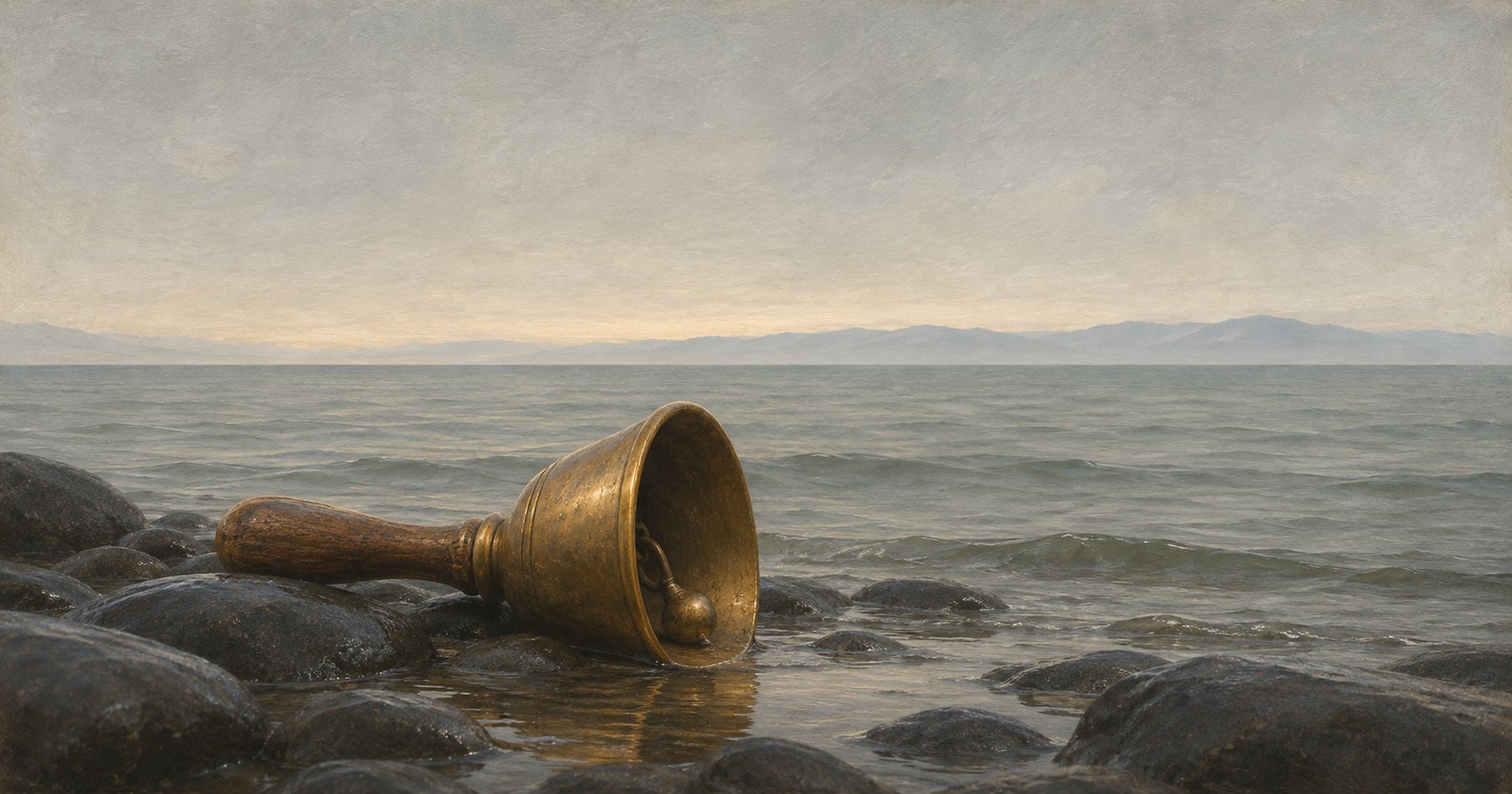
In Goa he spent his first months preaching and caring for the sick in the hospitals. He walked the streets ringing a small bell and calling the children to come and learn their catechism.
That autumn he went south to the pearl-fishing coast at the tip of India. The fishing families there had been baptized some years before, but no one had taught them the faith. In a letter of January 15, 1544, to his companions in Rome, he described how he began. They could not understand him, nor he them, “because their native language was Malabar and mine Basque.” So he gathered the most learned men among them, found people who knew both languages, and after many days of hard work they had the sign of the cross, the Creed, the commandments, the Our Father, the Hail Mary, the Salve Regina and the general confession in Tamil. He learned them by heart. Then, in our translation from the Spanish:
I went all through the town with a bell in my hand, gathering all the boys and men I could, and when I had gathered them I taught them twice a day. Within a month I had taught them the prayers, and I arranged it so that the boys would teach what they learned at school to their fathers and mothers, to everyone at home, and to their neighbors.
When people came to him asking him to pray over the sick, there were too many houses for one man, so he sent the boys who knew the prayers. They gathered the family and the neighbors and said the Creed many times over, telling the sick person to believe, and he would be healed. In the same letter he wrote, “So many are turning to the faith of Christ in this land where I am that it often happens that my arms are tired from baptizing, and I cannot speak from saying the Creed and the commandments so many times in their language.” Some days, he said, he baptized a whole village.
“Like a man who has lost his mind”
That letter also has the best-known lines he ever wrote, and the Church reads them in the Liturgy of the Hours on his feast. In our translation:
Many in these parts fail to become Christians because there is no one to take up such holy and devout work. Many times I am moved to go to the universities there, crying out like a man who has lost his mind, and above all to the University of Paris, and to say in the Sorbonne to those who have more learning than will to make it bear fruit: How many souls fail to reach glory and go to hell through their neglect!
If those students would pray over what God would ask of them, he went on, many of them would say, “Lord, here I am. What do you want me to do? Send me wherever you will, and if need be, even to the Indies.”
The islands of hope in God
In 1545 he went on to Malacca, on the Malay peninsula, and from there to the Moluccas, the spice islands at the far end of what is now Indonesia. He spent a year and a half going from island to island, among them Amboina and Ternate.
The Christians of the island of Moro had been left alone for years. One of the priests who baptized them had been killed, and no one had gone back, because the people there were known to put poison in food and drink. Xavier decided to go. “Many of my friends and devoted people tried to persuade me not to go to so dangerous a land,” he wrote, “and when they saw they could not stop me, they gave me many things against poison.” He would not take them. He asked his friends instead to remember him always in their prayers, “which are the surest remedies against poison that can be found.”
In a letter of January 1548 he wrote that all those dangers and labors, taken on for the love of God, were “rich treasures of great spiritual consolations,” so much so that a man there could lose his eyesight in a few years from weeping tears of consolation. “They would be better called the Islands of Hope in God,” he wrote, “than the Islands of Moro.”
Japan
Back in Malacca in 1547, he met a Japanese man named Anjirō, who had come looking for him. Anjirō had told some Portuguese traders about sins from his youth that weighed on him, and they told him about Xavier, so he came to Malacca to make his confession to him. He asked question after question and wrote down the articles of the faith as he learned them. “If all the Japanese are as eager to learn as Anjirō,” Xavier wrote, “it seems to me they are the most curious people of all the lands yet discovered.” Anjirō was baptized at Goa and took the name Paul of the Holy Faith.
Xavier landed with him at Kagoshima, Paul’s hometown, on August 15, 1549, the feast of the Assumption. He liked the Japanese at once. In our translation of his first letter from Japan: “The people we have met so far are the best yet discovered, and it seems to me that no other non-Christian people will be found to surpass them.”
The first year went to learning the language and, with Paul’s help, translating the main articles of the faith into Japanese. Xavier traveled to the city of Yamaguchi, where he and Brother Juan Fernández preached in the streets twice a day, reading aloud from the book they had made. He went on to Kyoto, the capital, hoping to see the emperor, but the country was torn by war and he could do nothing there. Back in Yamaguchi he went to the lord of the city with letters and a gift from the governor and the bishop of India, and this time he was received gladly. Many people were baptized, many of them from noble families.
One question troubled his listeners more than most: if his God had made all things, why had the Chinese never heard of him? The Japanese, he wrote, held the Chinese to be very wise, both about the things of the next world and about how to govern. Xavier came to believe that if China received the faith, Japan would follow. He left the Japanese mission in the care of Father Cosme de Torres and Brother Juan Fernández and sailed back to India late in 1551.
“I am already full of gray hairs,” he wrote from Cochin in January 1552, at forty-five, “but as for bodily strength, it seems to me I never had more than I have now.”
The island of Shangchuan
China was closed to foreigners. Xavier’s plan was to go as part of an embassy from the viceroy of India to the emperor, but in Malacca the Portuguese captain stopped the embassy and kept its ship. Xavier went on anyway. “I am going to the islands of Canton,” he wrote from the Strait of Singapore in July 1552, “stripped of all human help, hoping that some Muslim or pagan will take me to the mainland of China.”
In late August he reached Shangchuan, a small island a few miles off the coast, about thirty leagues from Canton, where Portuguese and Chinese merchants met to trade. None of the Chinese merchants would take him, because the penalty for bringing a foreigner in was severe. At last a man of Canton agreed, for two hundred cruzados, to carry him in a small boat crewed only by his own sons and servants, hide him in his house for a few days, and leave him one morning before dawn at the city gate with his books. Xavier knew the risks. The man might take the money and leave them on a desert island or throw them into the sea, or the governor might have them tortured or imprisoned. “Every day I am waiting for a Chinese man who is to come from Canton to take me,” he wrote in October. “Please God he comes.”
He never came. The Portuguese ships left one by one. On Sunday, November 20, after saying Mass, Xavier fell sick with a fever. The motion of the ship made it worse, so he was carried ashore to a hut of reeds. With him were a young Chinese man named Antonio, who had studied at the Jesuit college in Goa, and a young man from Goa named Cristóvão.
Antonio later told what he had seen. On Friday, December 2, he said, Xavier fixed his eyes on his crucifix and kept repeating, through tears, the Latin words of the psalm, In te, Domine, speravi: non confundar in aeternum, “In thee, O Lord, have I hoped, let me never be confounded.” He died in the dark before dawn on December 3, 1552, at forty-six. Some early accounts give the date as December 2. Only Antonio, the ship’s pilot and the two men carrying the coffin went with him to his grave.
Found whole
In February 1553, when a ship was ready to sail for Malacca, Antonio opened the grave to take the bones with him and found the body whole. It was carried to Malacca and then, in 1554, to Goa, where it rests today in the Basilica of Bom Jesus.
In 1614 his right arm, the arm he had baptized with, was cut off at the elbow and sent to Rome. It is kept at his altar in the Gesù, the mother church of the Jesuits. In January 2018 it was carried across Canada, to fourteen cities from St. John’s to Victoria.
About every ten years, the body is brought out in Goa for the faithful to venerate. The most recent exposition, the eighteenth, ran from November 21, 2024, to January 5, 2025. The one before it, in 2014, drew at least five and a half million pilgrims.
Patron of the missions
On March 12, 1622, Pope Gregory XV canonized Francis Xavier together with Ignatius of Loyola, Teresa of Ávila, Philip Neri and Isidore the Farmer.
In 1927, Pope Pius XI named St. Thérèse of Lisieux patron of the missions alongside him, with the same rank. Thérèse entered the Carmel at Lisieux at fifteen and never left it, and she died there at twenty-four. She helped the missions by her prayers, and by her letters to two young missionaries she prayed for. One of them, Adolphe Roulland, went to China.
The Novena of Grace
Many Catholics pray a novena to St. Francis Xavier called the Novena of Grace. It comes from Naples in 1633, where a young Jesuit named Marcello Mastrilli was struck on the head by a hammer that fell from a scaffold and was expected to die. Mastrilli said that Francis Xavier appeared to him, urged him to keep his vow to go to Japan, and healed him. He told the story widely before he sailed, and he died a martyr in Japan in 1637.
The novena is traditionally prayed from March 4 to March 12, ending on the anniversary of Xavier’s canonization. Many also pray it in the nine days before his feast, from November 25 to December 3.
His feast
St. Francis Xavier’s feast is December 3, a memorial on the Church’s calendar. In 2026 it falls on a Thursday in the first week of Advent. He is a patron of the missions and of missionaries, and of his native Navarre.
The prayer of his Mass asks for his zeal. In our translation from the Latin:
O God, who through the preaching of Saint Francis won many peoples for yourself, grant that the hearts of the faithful may burn with the same zeal for the faith, and that holy Church may everywhere rejoice in a great abundance of children. Through our Lord Jesus Christ. Amen.
A saint like this, every month
This is the sort of story in every issue of Saints by Mail: printed, reverent, and mailed to your door. A thoughtful gift for godchildren, families, and anyone who loves the saints.