The Real Good King Wenceslas, and the Footprints in the Snow
Wenceslas was a real duke of Bohemia in the 900s. His brother killed him at the door of a church, and the Czechs have honored him as their patron ever since.
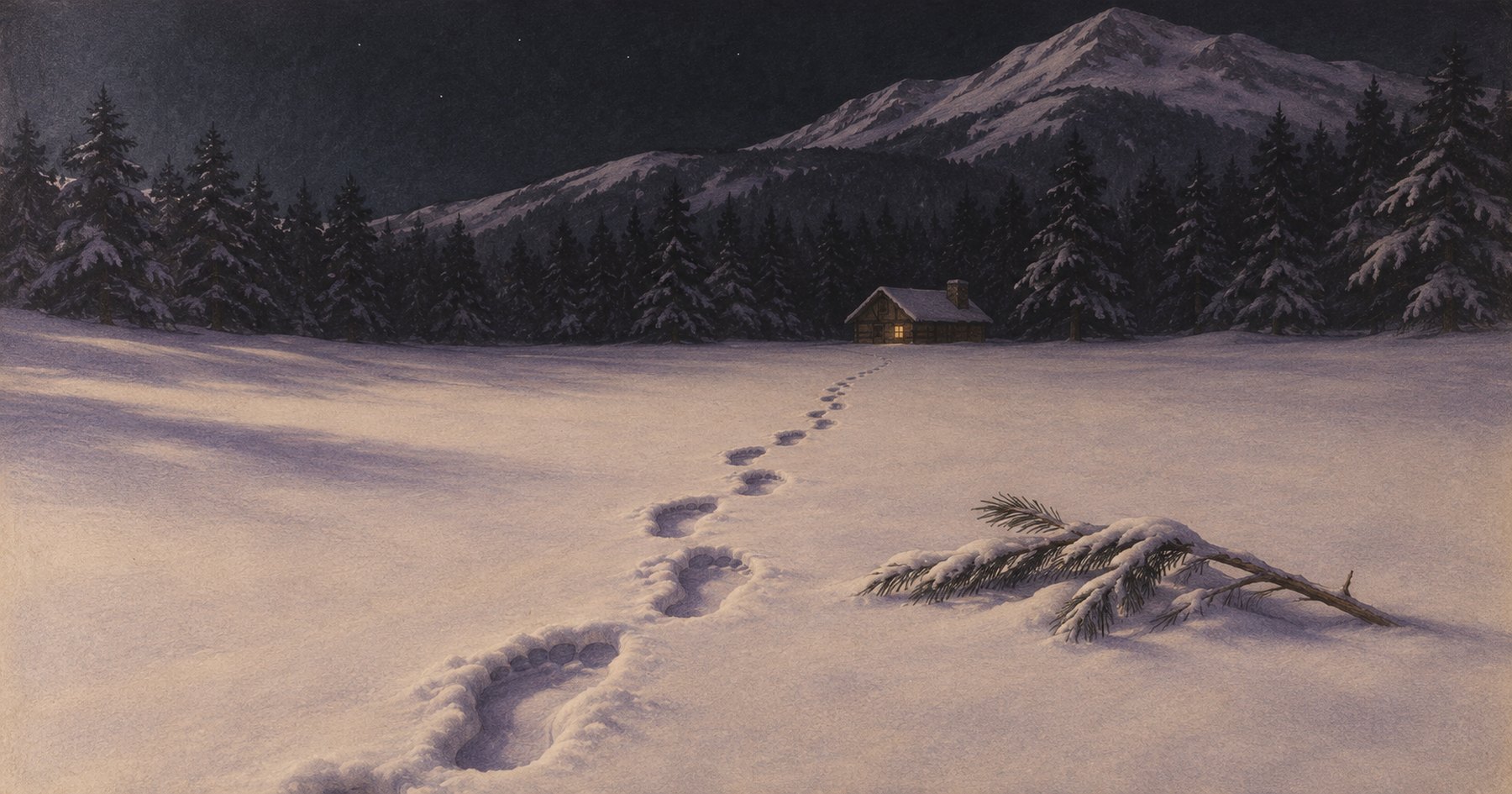
Every December, carolers sing about a king who looked out on the feast of Stephen, “when the snow lay round about, deep and crisp and even.” He saw a poor man gathering firewood, and he and his page went out into the storm to bring the man meat, wine and pine logs. When the page could go no farther, the king told him to walk in his footsteps, and the page found the snow warm where the saint had trod.
Wenceslas was a real man, though he was never a king. He was the duke of Bohemia, the heart of what is now the Czech Republic, in the early 900s. He died young, killed by his own brother on his way to Mass, and the Czechs have honored him as a martyr and as their patron ever since.
A Christian prince in a half-Christian country
Wenceslas was born around 907 into the family that ruled Bohemia. Christianity was new there. His grandparents, Duke Bořivoj and Ludmila, had been among the first Czechs of their rank to be baptized, by tradition at the hands of St. Methodius himself, and many of the nobles still kept to the old gods. His mother, Drahomíra, was baptized when she married his father, but the old lives of Wenceslas remember her as no friend to the Church.
His grandmother Ludmila raised him and taught him the faith. When his father died in 921, Wenceslas was about thirteen, and his mother and grandmother were soon at odds over who would guide him. That September, Ludmila was strangled with her own veil at the castle of Tetín, by men sent, the old lives say, by his mother. The Church honors her as St. Ludmila, a martyr, on September 16.
A few years later, at about eighteen, Wenceslas took the government into his own hands with the backing of the Christian nobles, and his mother was sent away from court. He brought in priests, built churches, and founded a round church dedicated to St. Vitus inside Prague Castle, on the spot where the cathedral stands today. In 929 the German king Henry the Fowler marched on Prague, and Wenceslas agreed to pay him tribute instead of fighting him, which kept the peace and was resented by some of his nobles.
What the old lives say about him
Four accounts of his life were written within a few decades of his death, in Old Church Slavonic and in Latin. The longest, known as Christian’s Legend, was written within about sixty years. They describe a prince who prayed more than princes usually did. In Lent and in winter, Christian’s Legend says, he walked barefoot over cold, rough roads from one castle to the next. He is remembered sowing and reaping the wheat for the hosts used at Mass, and picking and pressing the grapes for the altar wine, with his own hands.
Two centuries after his death, the chronicler Cosmas of Prague wrote that Wenceslas rose at night and went barefoot to the churches, and gave alms to widows and orphans, to prisoners, and to anyone in trouble. The carol grew out of that reputation.
The feast at Boleslav
His younger brother, Boleslav, held a stronghold of his own northeast of Prague. In September 935, Boleslav invited Wenceslas there to keep the feast of Sts. Cosmas and Damian. The next morning, September 28, Wenceslas was on his way to Mass when his brother attacked him. Boleslav’s companions joined in, and Wenceslas died at the door of the church. He was about twenty-eight.
The people of Bohemia honored him as a martyr almost at once. Three years later Boleslav had his brother’s body carried to Prague and laid in the church of St. Vitus, and the old lives say he did it in repentance. Wenceslas lies there still, in a chapel of the cathedral built over his tomb in the 1300s, its walls set with polished jasper and amethyst.
Like most saints of his era, he was never canonized in the modern sense. For the first thousand years of the Church, martyrs were recognized by the people and bishops who knew them, long before there was a formal process. His feast is September 28, the day he died.
Patron of the Czech lands
For the Czechs, Wenceslas became the patron of the country itself. They have been singing a hymn to him, the St. Wenceslas Chorale, since the Middle Ages, and in 1408 a church synod in Prague approved it for use in church. Its first verse, in our translation:
Saint Wenceslas, duke of the Czech land, our prince, pray for us to God, the Holy Spirit. Kyrie eleison.
When Czechoslovakia became independent in 1918, the chorale was considered for the national anthem.
In 1347 the emperor Charles IV had a new crown made for the kings of Bohemia and gave it to St. Wenceslas. It was meant to rest on the saint’s relics and be borrowed only for coronations. It is kept in the cathedral behind a door with seven locks, and the seven keys are held by seven different people, among them the president of the republic and the archbishop of Prague.
There is a legend, too, that an army of knights lies asleep inside Blaník, a hill southeast of Prague, and that when the Czech lands are in their greatest danger they will wake and ride out with Wenceslas at their head. His statue on horseback stands at the top of Wenceslas Square in Prague, where crowds gathered in 1989 in the protests that ended Communist rule. Since 2000, September 28 has been a national holiday, Czech Statehood Day.
How he became a king in an English carol
An old tradition says the emperor Otto I granted Wenceslas the title of king after his death. In his lifetime he was duke, and Bohemia had no king until 1085. The legends call him king anyway, and so does the carol.
The carol was written by John Mason Neale, an Anglican priest and scholar who also gave English speakers “O Come, O Come, Emmanuel” and “Good Christian Men, Rejoice.” He published it in 1853 in a collection called Carols for Christmas-tide, edited with the musician Thomas Helmore. The tune is much older than the words. It is a spring song from the 1200s, “Tempus adest floridum,” Latin for “the flowering time is here,” which survived in a songbook compiled in Finland and printed in 1582. A British diplomat in Stockholm had given Neale a rare copy of the book, and Neale and Helmore set new Christmas words to some of its tunes.
The barefoot winters come from the medieval lives. The poor man, the pine logs and the page warmed by his master’s footprints come from later retellings of the legend and from Neale himself. Neale had already told the story in prose in 1849, in a book of stories from Church history, and he seems to have drawn on a poem by the Czech writer Václav Alois Svoboda, published in Prague in 1847.
Not everyone liked it. In 1928 the editors of the Oxford Book of Carols called it one of Neale’s “less happy pieces” and hoped it would “gradually pass into disuse.” Nearly a hundred years later it is still sung everywhere.
The feast of Stephen
The carol is set on December 26, the feast of St. Stephen, the first martyr, who was stoned to death outside Jerusalem praying for the men who killed him. The day after Christmas has long been a day for giving to the poor, which suits the carol. Wenceslas, like Stephen, was a martyr, though the carol never mentions how he died.
The last verse of the carol puts its lesson plainly:
Therefore, Christian men, be sure,
Wealth or rank possessing,
Ye who now will bless the poor
Shall yourselves find blessing.
The Church keeps his feast in September. Most English speakers know him only from the day after Christmas, and the carol.
A saint like this, every month
This is the sort of story in every issue of Saints by Mail: printed, reverent, and mailed to your door. A thoughtful gift for godchildren, families, and anyone who loves the saints.