The St. Andrew Christmas Novena: How to Pray It, and Who St. Andrew Was
One short prayer, said fifteen times a day from November 30 until Christmas, and named for the apostle whose feast begins it.
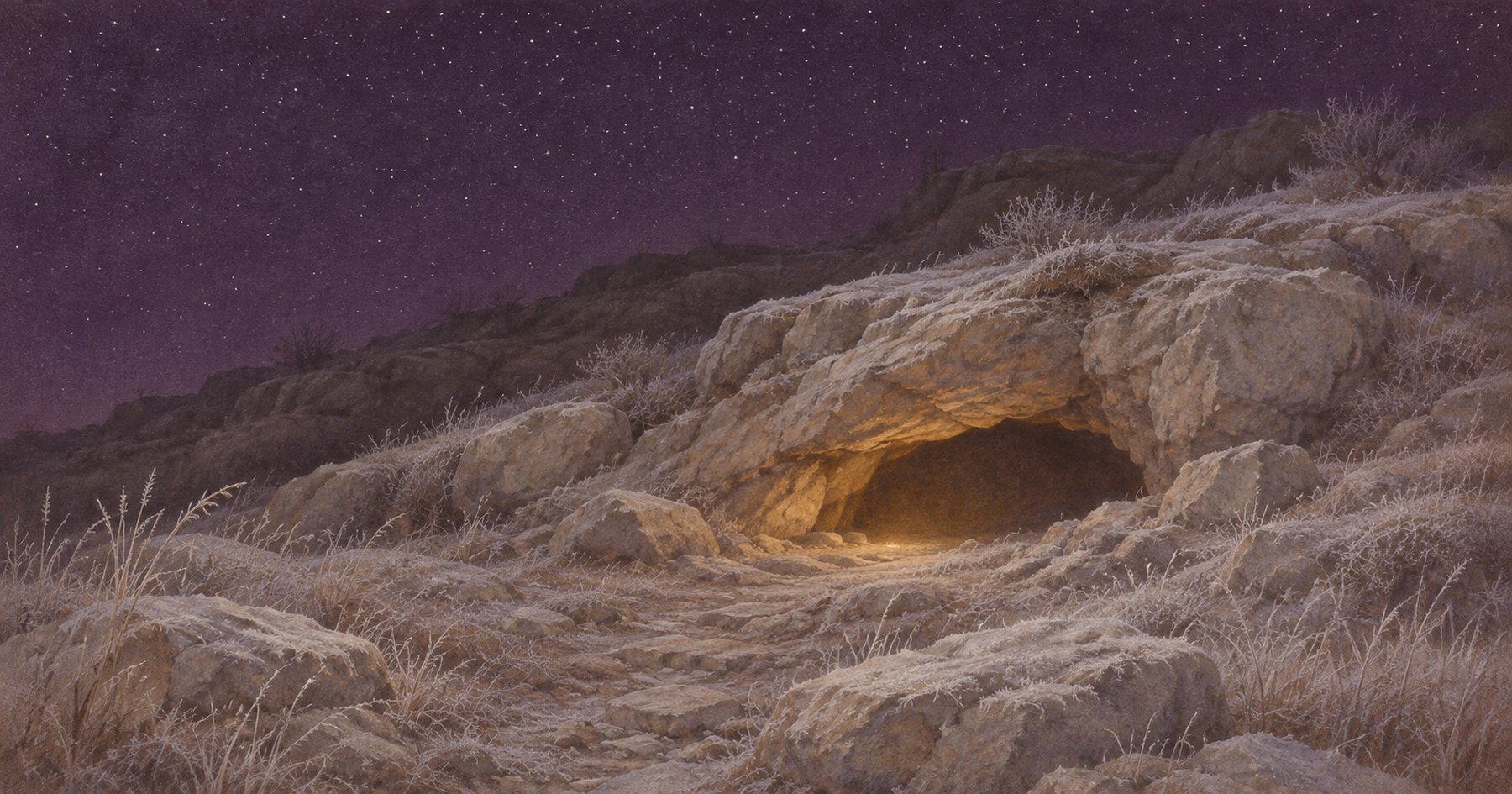
Every year on November 30, the feast of St. Andrew the Apostle, many Catholics begin saying this prayer, and they keep saying it fifteen times a day until Christmas:
Hail and blessed be the hour and moment in which the Son of God was born of the most pure Virgin Mary, at midnight, in Bethlehem, in piercing cold. In that hour vouchsafe, O my God, to hear my prayer and grant my desires, through the merits of Our Savior Jesus Christ, and of His blessed Mother. Amen.
It is called the St. Andrew Christmas Novena, and two things about the name surprise people. It is not a novena in the strict sense, since a novena lasts nine days and this one runs for twenty-five. And it is not a prayer to St. Andrew. It speaks to God, about one hour in Bethlehem.
Andrew’s part is the date. The Church begins Advent on the Sunday closest to his feast, so his day always falls within a few days of the season’s start, and that is where the novena begins.
How to pray it
Say the prayer fifteen times a day, from November 30 through Christmas Eve. In 2026 that means starting on Monday, November 30, the day after the First Sunday of Advent.
Fifteen sounds like a lot, but the prayer is short, and a day’s worth takes under ten minutes. There is no set way to divide it. Some people say all fifteen at once. Others say five in the morning, five at midday and five at night. A rosary helps with the counting: one decade, then five more beads. Some families say it together at dinner and pass it around the table.
The prayer asks God to “grant my desires,” and many people keep one intention for the whole season. It is a private devotion, so there is no rule about a missed day; the usual practice is to add the missed prayers to the next day.
Along the way it runs through St. Nicholas Day on December 6 and the Immaculate Conception on December 8.
Where it came from
Nobody knows who wrote it. It is usually said to have come from Ireland, but no one has found where or when it began.
Many printed copies carry an imprimatur from Michael Augustine Corrigan, Archbishop of New York, dated 1897, so it was in use in America by then. Those cards usually add a line: “It is piously believed that whoever recites the above prayer fifteen times a day from the Feast of St. Andrew (November 30th) until Christmas will obtain what is asked.”
“Piously believed” is careful wording. It reports what people believe, and the Church has never made that promise itself. An imprimatur means a bishop found nothing in a text contrary to faith or morals; it is not a guarantee of results. The prayer itself asks in the right way, through the merits of Christ and His Mother, and it leaves the answer to God.
Scripture does not say what hour Christ was born. Luke says only that the shepherds were out in the fields keeping watch at night. The midnight comes from Christian devotion, which heard the Nativity in a line from the Book of Wisdom that the Church has long sung at Christmastime: “While all things were in quiet silence, and the night was in the midst of her course, Thy almighty word leapt down from heaven.”
The first one called
Andrew was a fisherman from Bethsaida, on the Sea of Galilee, and the brother of Simon Peter. Before he met Jesus he was a disciple of John the Baptist.
St. John’s Gospel tells how it happened. John the Baptist saw Jesus walking by and said, “Behold the Lamb of God.” Andrew and another disciple followed Jesus and spent the rest of that day with Him. The Gospel says the first thing Andrew did afterward was to find his brother and tell him, “We have found the Messiah.” And he brought him to Jesus.
That is why the Eastern churches call him the Protoclete, the First-Called. In Mark’s Gospel the call comes on the shore: Jesus finds the two brothers casting a net into the sea and tells them, “Come after me, and I will make you fishers of men,” and they leave their nets and follow.
Peter became the head of the apostles. Andrew went on doing what he did that first day, which was bringing people to Jesus. At the feeding of the five thousand, he is the one who found the boy with five barley loaves and two fish, though he wondered aloud what good they were among so many. When some Greeks came asking to see Jesus, they went to Philip, Philip went to Andrew, and the two of them took the request to Jesus.
A cross at Patras
The New Testament last mentions him among the apostles gathered in Jerusalem after the Ascension. The rest comes from tradition, which sends him to preach around the Black Sea and in Greece, and says he was crucified at Patras, on the Greek coast. The best-known account of his death, written down long after it, says he was tied to the cross rather than nailed, so that he would suffer longer, and that he greeted the cross before he was raised on it. In the Latin version that the Church sang on his feast for centuries, his words are these:
O good cross, made beautiful by the body of the Lord, long desired, eagerly loved, sought without ceasing, and now at last made ready for my longing soul: take me from among men and give me back to my Master, so that He who redeemed me through you may receive me through you.
Painters later gave him a cross shaped like an X, and that is the white cross on the flag of Scotland, which took him as its patron. Scottish legend says a white X appeared against a blue sky before a battle there in the ninth century.
Like the other apostles, he was honored as a saint long before there was any process for making one. In the fourth century his relics were taken to Constantinople. After crusaders sacked that city in 1204, the relics were carried to Amalfi, on the Italian coast, where they still rest in the cathedral crypt. His head went to Rome in the fifteenth century, and in 1964 Pope Paul VI sent it back to Patras as a gift to the Orthodox Church.
Two brothers, two churches
The church of Constantinople counts Andrew as its founder, the way Rome counts his brother Peter. Every year on November 30, a delegation from the Pope goes to Istanbul for the Ecumenical Patriarch’s celebration of St. Andrew, and every June 29 the Patriarch sends one to Rome for the feast of Sts. Peter and Paul. The two churches have been divided for nearly a thousand years, and they still keep each other’s feasts.
The first thing Andrew did after meeting Jesus was to carry the news of the Messiah to his brother. A prayer that begins on his day and ends at the manger suits him well.
A saint like this, every month
This is the sort of story in every issue of Saints by Mail: printed, reverent, and mailed to your door. A thoughtful gift for godchildren, families, and anyone who loves the saints.