The Story of Padre Pio, Who Was Silenced by His Own Church
No modern saint was tested harder by his own Church, and the testing is the best thing in the story.
In 1931 a Capuchin friar in a remote friary in southern Italy was told by Rome that he could no longer say Mass in public, hear confessions, answer letters, or show himself to the crowds who had been arriving for years to see him.
He was the most talked-about priest in Italy. He had visible wounds in his hands. Thousands of people had traveled to that hillside on his account.
He said that the will of his superiors was the will of God, went upstairs, and said Mass alone in an inner chapel for two years.
That is the part of Padre Pio’s life worth starting with, because everything else about him is contested and that is not.
Pietrelcina
He was born Francesco Forgione in 1887 in Pietrelcina, a hill town in Campania, into a family of peasant farmers. There was no money for schooling, so his father Grazio went to Pennsylvania and worked there for years to pay for his son’s education, which is the kind of ordinary sacrifice that never makes it into the paintings.
He entered the Capuchins at fifteen and took the name Pio. He was ordained in 1910. He was sick for most of his young adulthood, repeatedly sent home from the friary to recover from illnesses nobody could name, and briefly conscripted into the Italian army medical corps in the war before being discharged again for his health.
In 1916 he was sent to San Giovanni Rotondo, a friary on a spur of Monte Gargano in Puglia, chosen partly because the mountain air might help his lungs. He was twenty-nine. He stayed for fifty-two years and died there.
September 20, 1918
He was praying alone in the choir loft after Mass when, by his own account, he was pierced and left with wounds in his hands, feet, and side.
They did not go away. He carried them for fifty years.
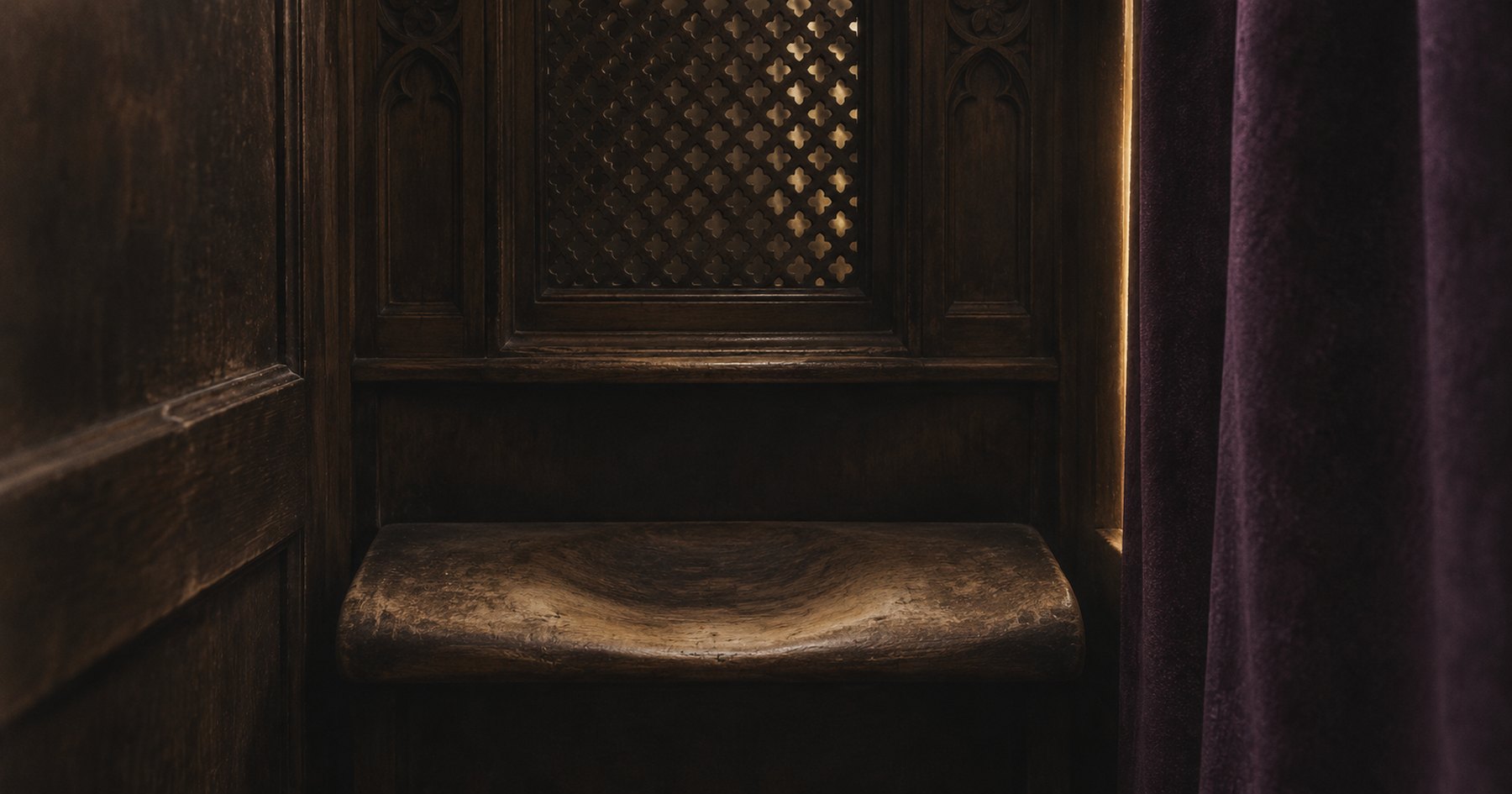
What followed was the least private half-century imaginable. Word traveled, then newspapers traveled, and San Giovanni Rotondo turned from a nowhere village into a destination. People came in numbers the roads could not handle, and they came for confession above all. For decades he heard confessions for ten, twelve, sometimes more hours a day. That, not the wounds, is what most of his life actually consisted of: sitting in a box listening to people.
Alongside it grew a body of reported wonders. That he was seen in two places at once. That a scent of flowers accompanied him. That he knew what a penitent had not said. These belong to devotional tradition rather than to the documentary record, and the honest way to hold them is the way the Church does: they are widely and sincerely reported, they are not what he was canonized for, and nothing about them has been formally defined one way or the other.
The investigations
Here is what the Church did about all this, and it is not what people assume.
It investigated him, hard, for most of his adult life.
Physicians were sent to examine the wounds and filed reports that did not agree with one another. The Holy Office looked into the case repeatedly through the 1920s. In 1923 it declared that nothing supernatural had been established in the events at San Giovanni Rotondo, which is a narrower statement than it sounds, and it is the kind of statement the Church makes when it does not intend to endorse something it cannot verify.
Then came the restrictions. Through the 1920s his ministry was progressively curtailed, and from 1931 to 1933 it was shut down almost entirely. He was allowed to say Mass only in private. He was cut off from the people who had come for him.
He did not appeal to his followers. He did not give interviews. There was a large and devoted crowd that would have made a great deal of noise on his behalf, and he did not use it. Pius XI restored his faculties in 1933, reportedly remarking that he had not been badly disposed toward the friar but had been badly informed.
It happened again. In the late 1950s and through the 1960s there were further inquiries, further restrictions, apostolic visitors sent to look into the money moving through his projects and the fervor of the cult around him. He submitted to those too.
Fifty years of being watched by his own institution, and no recorded complaint.
What he built while under suspicion
In 1956, in the middle of all of it, he opened a hospital.
The Casa Sollievo della Sofferenza, the Home for the Relief of Suffering, was built on that same remote hillside out of donations gathered from around the world. It was not a clinic. It was a large modern hospital in one of the poorest parts of Italy, and it is still one of the major hospitals in the south.
A man restricted from public ministry spent those years raising money for a place where sick people could be treated properly. It is the least mystical fact about him and possibly the most persuasive.
What the Church actually canonized
He died on September 23, 1968, at eighty-one. The wounds, which had been examined and photographed and argued over for half a century, were reported to have closed before his death, leaving nothing behind.
In 1947 a young Polish priest named Karol Wojtyla had come to San Giovanni Rotondo and made his confession to him. Fifty-five years later, as John Paul II, he canonized him.
This matters for understanding what a canonization is. It is a judgment about heroic virtue, not a ruling on phenomena. The Church has never formally declared the stigmata supernatural, and it did not need to. What was examined in the process that made him a saint was how he lived, and the healings brought forward went through the ordinary scrutiny like anyone else’s.
The thing the Church could see plainly, and weigh, was the obedience. A man with every means of resisting who never once used them.
Why he is asked for
He is invoked for healing, for civil defense volunteers, and by an enormous number of people who simply have a photograph of him somewhere in the house. His prayer groups run in dozens of countries. San Giovanni Rotondo still receives millions of pilgrims a year, which puts it among the most visited Catholic shrines anywhere.
There is a line of his that gets quoted on a great many holy cards: pray, hope, and do not worry. It sounds like nothing much until you know that it was written by somebody who spent fifty years being investigated and did not spend any of it worrying out loud.
Like Mother Teresa, whose feast falls a few weeks before his, the interesting thing about him is not the part that made the newspapers. It is what he did on the days when nobody was watching, which in his case were the two years when Rome had made certain that nobody could.
A saint like this, every month
This is the sort of story in every issue of Saints by Mail: printed, reverent, and mailed to your door. A thoughtful gift for godchildren, families, and anyone who loves the saints.