The Story of Our Lady of Guadalupe, and the Man Who Carried the Roses
In December 1531, a convert named Juan Diego was given a message for the bishop of Mexico, and he did not think he was the man to carry it.
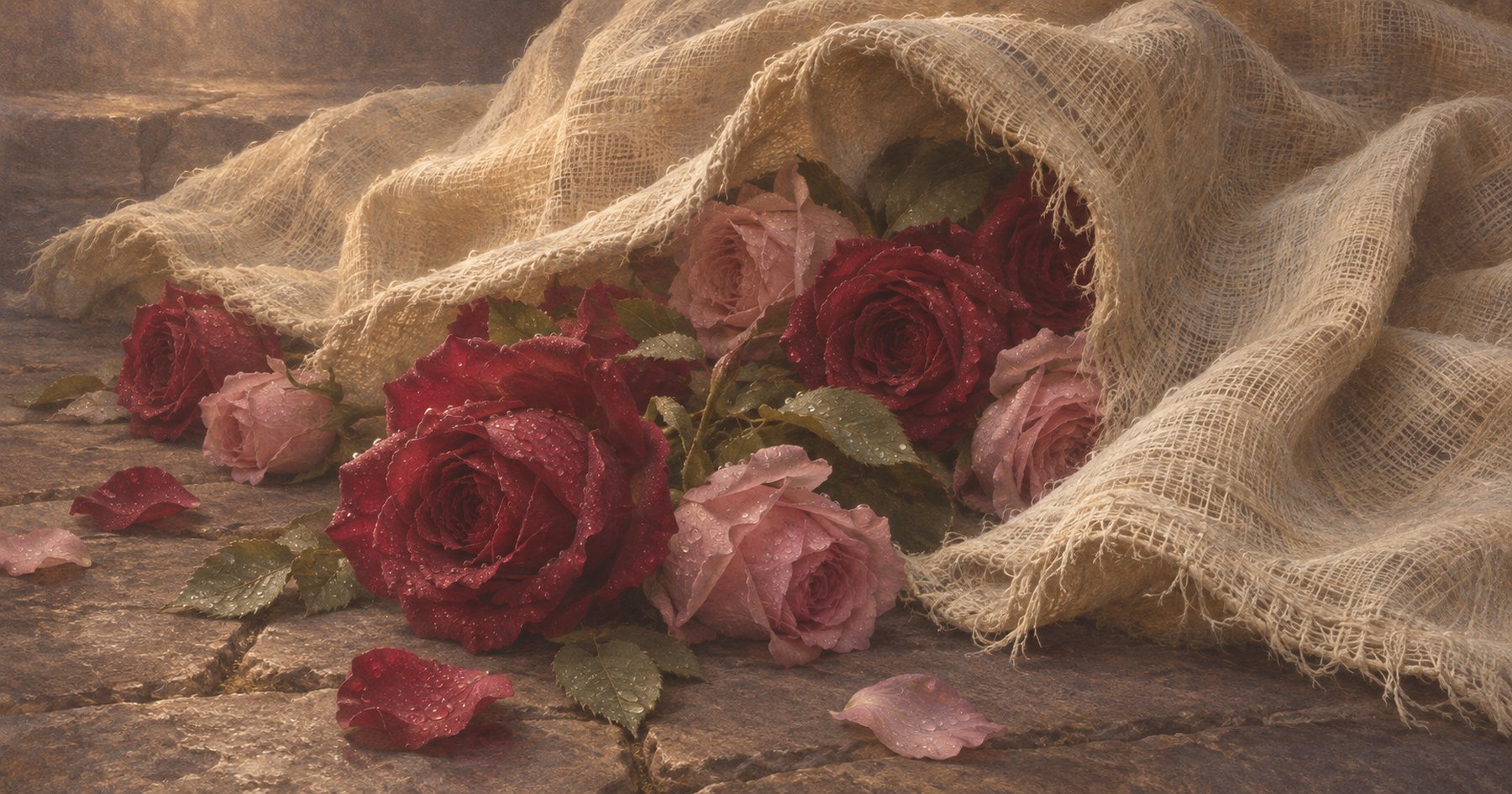
On December 12, millions of pilgrims climb to a hill on the north edge of Mexico City called Tepeyac, and parishes across the Americas fill before dawn with roses and singing. They are keeping the feast of Our Lady of Guadalupe, and remembering a man named Juan Diego, who stood in front of a bishop in December 1531 with his cloak full of flowers.
Juan Diego
Juan Diego was a Nahua, one of the Indigenous people of central Mexico, born before the Spanish arrived. His Nahuatl name is recorded as Cuauhtlatoatzin. He became a Christian as an adult, baptized by Franciscan missionaries in the years after the fall of the Aztec capital, and by 1531, tradition says, he was a widower. He was a commoner with no rank of any kind, and he walked many miles to the Franciscan church at Tlatelolco for Mass and instruction.
Four meetings on a hill
What follows comes from a Nahuatl account called the Nican Mopohua, after its first words, “Here is told.” Where we quote it, the translation is our own.
Early on the morning of December 9, 1531, on his way to church, Juan Diego passed the hill of Tepeyac and heard singing like birdsong. At the top he found a young woman, shining, who spoke to him in his own language, called him by name, and told him she was the ever-virgin Holy Mary, mother of the true God. She asked him to go to the bishop and tell him she wanted a house built for her on that spot, where she could show her love and help to everyone who came to her.
The bishop was Juan de Zumárraga, a Franciscan and the first bishop of Mexico. He received Juan Diego kindly and did not believe him. Juan Diego went back to the hill and begged the Lady to send someone else, someone of standing whom the bishop would listen to. “For I am only a poor man,” he told her. “I am a porter’s rope, a carrying frame, a tail, a wing.” In Nahuatl those are the words for a man who carries other people’s loads and follows where he is led. She answered that she had many servants she could send, and that she had chosen him.
He went to the bishop again. This time the bishop asked for a sign.
Then Juan Diego’s uncle, Juan Bernardino, fell gravely ill. On December 12, Juan Diego set out before dawn to bring a priest to his dying uncle, and he took a path around the hill so the Lady would not delay him. She came down and met him on it. When he told her about his uncle, she answered with the words the account is best remembered for: “Am I not here, I who am your mother?” His uncle, she told him, was already well.
She sent him to the top of the hill to gather flowers. It was December, and the hilltop was rock and thorn scrub, but he found flowers from Castile blooming there, out of season and wet with dew. Tradition remembers them as roses. He gathered them into his tilma, the cloak of woven plant fiber that Nahua men wore knotted at the shoulder. She arranged them with her own hands and sent him to the bishop, telling him to open the cloak for no one else.
In the bishop’s house he let the cloak fall open. The flowers spilled to the floor, and on the cloth was the image of the Lady. The bishop and those with him fell to their knees. Juan Bernardino, meanwhile, had risen from his sickbed. The Lady had appeared to him as well, he said, and had given the name by which her image was to be known: Holy Mary of Guadalupe.
The image
The tilma still hangs in the Basilica of Our Lady of Guadalupe at Tepeyac. It shows a young woman standing before the rays of the sun, on a crescent moon held up by an angel. Her blue-green mantle is scattered with stars. Her head is bowed and her hands are joined in prayer. A dark band at her waist is often read as the sign of a woman expecting a child.
She is the woman of the Book of Revelation, “clothed with the sun, and the moon under her feet,” the same figure painters used for the Immaculate Conception. Preachers and scholars have long pointed out what a Nahua viewer would have noticed: a woman standing in front of the sun and on the moon, both of which the old religion had worshiped, who bows her head and prays to someone greater than herself.
The name Guadalupe already belonged to a famous shrine of Mary in Extremadura, in Spain, though the image there looks nothing like this one. Some have suggested that Spanish ears heard a Nahuatl word as Guadalupe. There is no agreement on it.
What the records show
The story as told above was first published in the 1640s: in Spanish by a priest named Miguel Sánchez in 1648, and the next year in Nahuatl by Luis Laso de la Vega, the vicar of the shrine. The Nahuatl account has long been credited to Antonio Valeriano, a Nahua scholar trained by the Franciscans, who lived in the middle of the 1500s. That would put it within a generation of the events. Historians still debate who wrote it and when.
Some things are documented much earlier. By the 1550s a chapel at Tepeyac with a much-loved image of Mary was drawing crowds. In 1556 the archbishop of Mexico preached in favor of the devotion, and a leading Franciscan preached against it, worried that new converts would honor the image the way their ancestors had honored idols. On the other side of the ledger, none of Bishop Zumárraga’s surviving writings mention the apparitions. In 1666, Church officials took sworn testimony from elderly Indigenous witnesses in Juan Diego’s home region of Cuautitlán, some of whom said their parents or grandparents had known him.
When Juan Diego’s cause for canonization moved forward in the 1990s, some historians questioned whether he had existed at all. The Holy See had a commission of historians examine the evidence, and it concluded in his favor. John Paul II, who had beatified Juan Diego in 1990, canonized him in Mexico City on July 31, 2002. His feast is December 9, the day of the first meeting.
Like every apparition, Guadalupe belongs to what the Church calls private revelation: Catholics are free to believe it and are not bound to. The Church’s own judgment shows in what it has done. Pope Benedict XIV approved the feast with its own Mass in 1754, popes have honored the image again and again since, and in 2002 the Church declared the man who carried the flowers a saint.
Five centuries at Tepeyac
In 1810, when Father Miguel Hidalgo called Mexico to rise for independence, his followers marched behind a banner of Our Lady of Guadalupe. In 1910 Pope St. Pius X named her patroness of Latin America. In 1945 Pope Pius XII called her Empress of the Americas, and in 1999 Pope St. John Paul II asked that her feast be kept on December 12 throughout the Americas.
In 1921, in years of fierce government hostility to the Church in Mexico, a man left a bomb hidden in an arrangement of flowers beneath the image. The blast shattered windows and bent a heavy metal crucifix on the altar, and the image was not harmed. The bent crucifix is kept at the basilica.
The ground under the old church was sinking, and in 1976 the image was moved to a new basilica, built round so that it can be seen from anywhere inside. Moving walkways carry pilgrims beneath it so the crowds keep flowing. It is one of the most visited Catholic shrines in the world.
Keeping December 12
In the United States, December 12 is a feast on the Church’s calendar but not a holy day of obligation. In 2026 it falls on a Saturday. In many parishes, especially Mexican and Mexican-American ones, the day begins before dawn with Las Mañanitas, the traditional birthday song, sung to Our Lady, often with mariachis. Then come Mass, roses and a meal. Many parishes and families pray a novena in the nine days before.
St. Juan Diego’s feast on December 9 and Our Lady of Guadalupe on December 12 mark the first meeting on the hill and the morning of the flowers. Both fall in Advent, a few days after the Immaculate Conception.
Juan Diego asked her to send someone more important. She sent him anyway, and pilgrims have been climbing to the hill ever since because of what he carried down from it.
A saint like this, every month
This is the sort of story in every issue of Saints by Mail: printed, reverent, and mailed to your door. A thoughtful gift for godchildren, families, and anyone who loves the saints.