Our Lady of Sorrows, and the Church's Feast Day for Grief
The day after the Church looks at the cross, it looks at the woman standing under it.
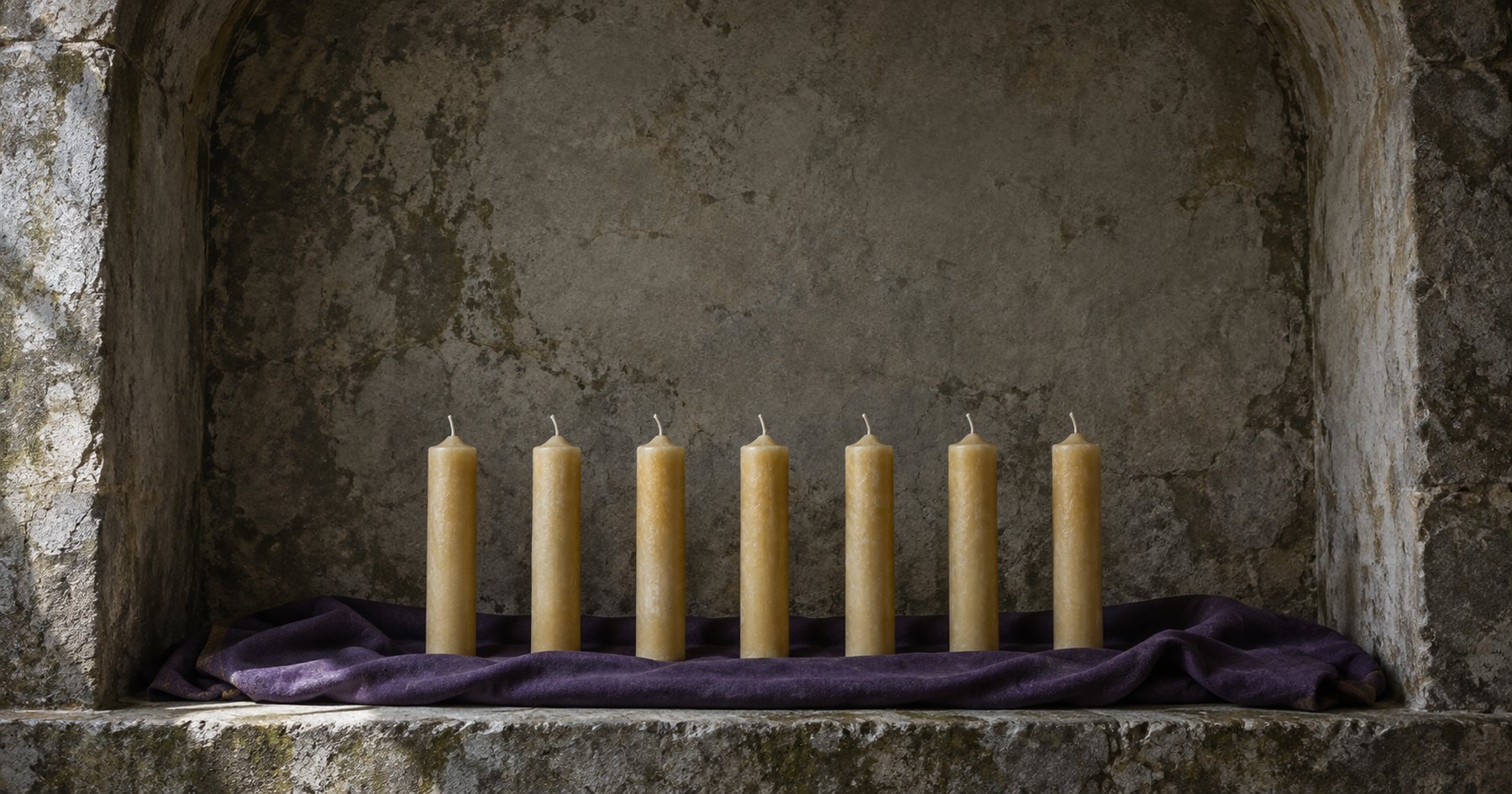
The calendar keeps September 14 for the Exaltation of the Holy Cross, which is the day for looking directly at the thing itself.
The next day belongs to the person who had to stand there and watch.
September 15 is the feast of Our Lady of Sorrows, and the sequence is deliberate. One day for the event, the next for what it did to somebody who loved him. It is the closest thing the year has to a feast for grief, and most people, including a lot of Catholics, do not know it is there.
The seven
The devotion organizes itself around seven particular griefs. Not sorrow in general, which is hard to pray about, but seven specific bad days.
- Simeon’s prophecy. Mary brings the baby to the Temple and an old man tells her that a sword will pierce her own soul too. She is handed the warning at the beginning and has to carry it.
- The flight into Egypt. Waking in the night and running for the border with a child, because somebody in power wants him dead.
- Losing him in Jerusalem. Three days of not knowing where her twelve-year-old was. Any parent who has lost a child in a shop for ninety seconds can scale that up and feel it.
- Meeting him on the road to Calvary.
- Standing at the cross. John puts her there, in the one sentence that has done more for grieving Christians than most of the rest of the literature combined: standing near the cross of Jesus was his mother.
- Receiving his body when it was taken down.
- The burial. Walking away from a sealed tomb.
Four of those are narrated in the Gospels. The meeting on the road, and the moment of receiving the body, come from tradition rather than from the text, and they are the two that Christian art has painted most often, which is not a coincidence. The Pieta is a devotional image before it is a scriptural one.
That is worth saying plainly, and it takes nothing away. The tradition filled in what a mother would obviously have done, and it filled it in the same way for centuries, and the filling-in is itself a kind of witness.
Where it came from
The devotion is medieval. It grew through the twelfth and thirteenth centuries, alongside a broader shift in European piety toward the human suffering of Christ, and it was carried especially by the Servites, an order founded in Florence in 1233, who took the sorrows of Mary as their particular subject and spread the sevenfold form.
It produced the Stabat Mater, the thirteenth-century hymn that begins with the mother standing in tears beside the cross, which has since been set to music by what feels like every composer who ever lived.
For a long time there were two feasts, one in Lent and one in September. Pius VII extended the September observance to the whole Church in 1814, shortly after returning from years as Napoleon’s prisoner, which may or may not have sharpened his interest in the subject. Pius X fixed it on September 15 in 1913, and there it has stayed.
In art she is shown with seven swords in her heart, one for each, which is a literal-minded image and an effective one.
Why a feast for this
Most of the calendar is celebration. Saints who did remarkable things, doctrines defined, victories of one kind or another. The general mood is upward.
This one is not, and it is not trying to be. There is no resolution offered on September 15. The Resurrection is a different day. This feast holds still at the part where somebody’s child is dead and nothing has been fixed yet.
That is unusual, and it is the reason the day is useful. Grief does not respond well to being told it will be fine eventually. What it responds to, sometimes, is the discovery that somebody else has been in the same place, and that the institution around you has thought it worth marking on the calendar rather than hurrying past.
She is asked for by the bereaved, by parents who have buried children, and by people sitting with somebody who is dying. Monica is the patron of mothers who are waiting. Our Lady of Sorrows is the patron of the ones whose waiting is over and did not end the way they wanted.
The other end of the year
There is a symmetry in the Marian calendar worth noticing.
Eight days earlier, on September 8, the Church keeps her birthday: a feast of pure beginning, a baby who has not done anything yet, nothing required of her.
Then September 15, and the whole account of what was in fact required.
The two sit a week apart on purpose or by accident, nobody quite knows, but the pairing is honest about how a life works. The Assumption in August is the ending, and it is a good one. September is the middle, where most people live.
If you have lost somebody this year, September 15 is your day on the calendar. You do not have to do anything with it. It is simply there, and it has been there for eight hundred years, which is longer than most consolations last.
A saint like this, every month
This is the sort of story in every issue of Saints by Mail: printed, reverent, and mailed to your door. A thoughtful gift for godchildren, families, and anyone who loves the saints.